
A ryokan room with its own private bath cost ¥24,200 to ¥28,600 more per night for two than a standard room at the same inn, on the same dinner-and-breakfast plan. That is roughly $150 to $180, or 43% to 61% on top. We read three official booking pages for the same night, Thursday 21 January 2027: one in Hakone, one in Kurokawa and one in Kusatsu.
The cheapest of the three is also the warning. At ¥63,800 per room, its private open-air tub is not hot-spring water, and the booking page says so in one line of Japanese. This guide covers the three kinds of private bath, what each costs, the Japanese words that find them, and how to check the water before you pay.
What counts as a "private onsen" at a ryokan?
Three different things hide behind the phrase. An in-room bath belongs to your room for the whole stay. A kashikiri (貸切風呂) is a shared private bath you lock or book for a slot, often 45 to 50 minutes. A day-use kashikiri is the same bath rented without staying the night. All three let you bathe without strangers. Only the first lets you bathe at 2am, and only the first adds ¥24,000 or more to the bill.
The in-room version comes in two forms. 客室露天風呂 is an open-air tub on a balcony or terrace; 客室内湯 or 客室温泉 is an indoor tub inside the room. Both count as private. Listings in English blur these, so read the Japanese room name.
Kashikiri rules vary by ryokan. At Hakone Kamon the private baths are a paid 45-minute slot, weekdays only, booked at the front desk within a week of arrival. At Yamamizuki in Kurokawa the hinoki-wood private bath costs ¥2,000 for 50 minutes.
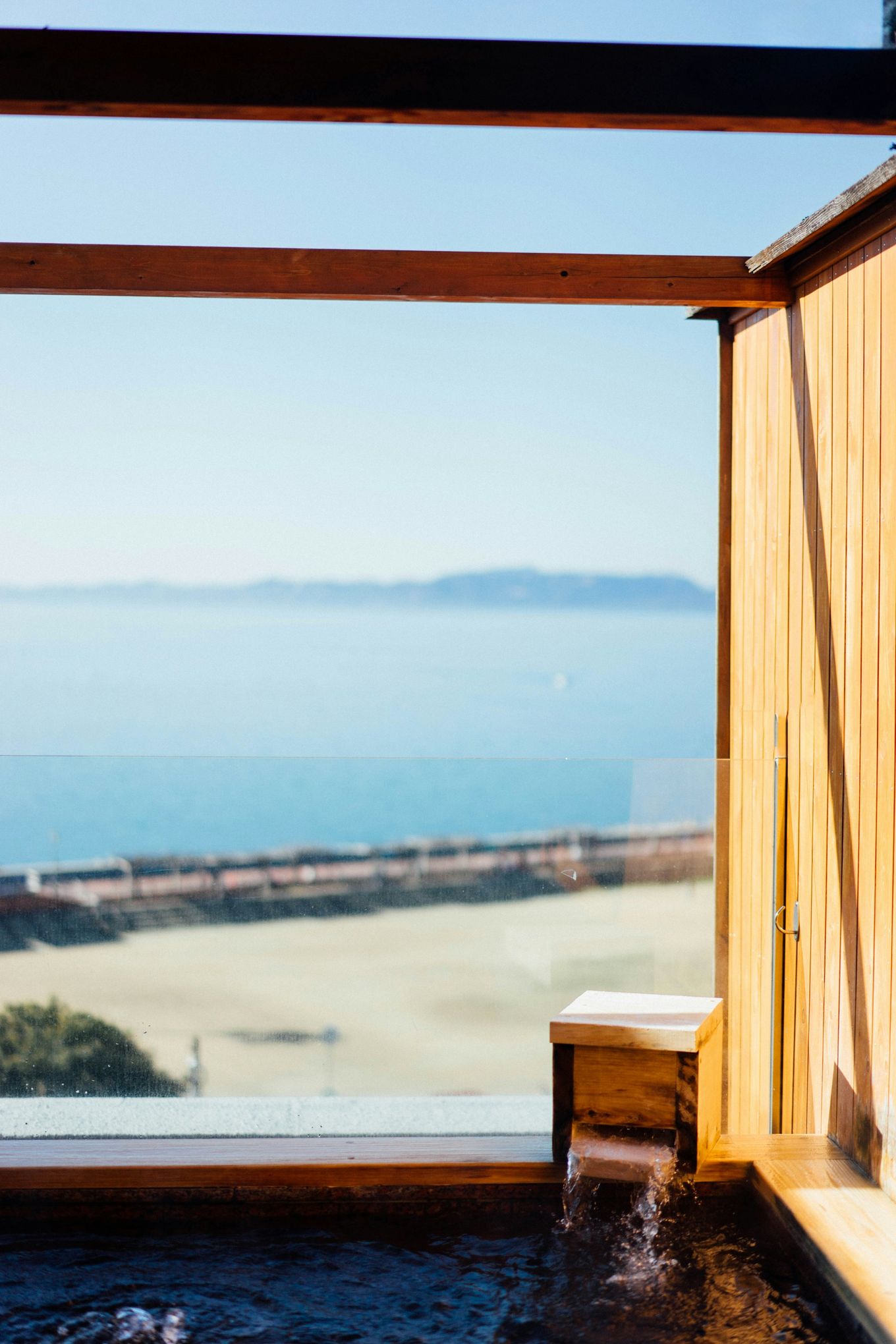
How much more does a room with a private open-air bath cost?
About ¥24,000 to ¥29,000 more per night for two, in our sample. We priced a room with its own bath against a standard room on the same plan, same night (Thursday 21 January 2027), two adults, dinner and breakfast, on each ryokan's own Japanese booking page. The jump was +43% in Hakone, +50% in Kurokawa and +61% in Kusatsu. In cash it was nearly flat: ¥24,200 to ¥28,600.
- Hakone Kamon, Hakone-Yumoto. A standard 10-tatami room on its most popular kaiseki plan costs ¥33,000 per person, ¥66,000 for two. On the same plan, room 403, renovated in 2025 with its own open-air bath, costs ¥47,300 per person, ¥94,600 for two. Difference: ¥28,600.
- Yamamizuki, Kurokawa Onsen. The twin room without a bath costs ¥48,400 for two on the standard plan. Hanamizu, the room with its own indoor hot-spring tub, costs ¥72,600. Difference: ¥24,200.
- Hotel Sakurai, Kusatsu Onsen. A standard Japanese room in the main wing costs ¥39,600 for two on the basic buffet plan. The room with an open-air tub costs ¥63,800. Difference: ¥24,200. The standard room here has a shower booth and no tub at all.
All prices include consumption tax. Add the bathing tax, ¥150 per person per night at the standard rate, at check-out. Three ryokan are a sample, not an index: other nights and room types cost more or less. If the full price is out of reach, our guide to a Hakone ryokan on a budget covers the cheaper end of the same town.
Is it real onsen water or reheated tap water?
Not always onsen, and you can check before you book. Japan's Hot Springs Act defines onsen as ground water that is at least 25°C at the source or contains one of 19 listed substances. An in-room tub can legally be filled from the tap. Of our three samples, two state that the in-room bath runs on spring water. The third, Hotel Sakurai in Kusatsu, writes on its booking page: 部屋の露天風呂は温泉ではありません. The room's open-air bath is not onsen.
Words to look for on the room or bath page:
- 源泉かけ流し (gensen kakenagashi): spring water flows in and out, not recirculated. Kamon uses it for its in-room baths and private baths; Yamamizuki for its in-room tub.
- 循環 (junkan), 加温 (kaon), 加水 (kasui): recirculated, heated, diluted. Still onsen, just treated. Kamon notes its large shared baths are recirculated for hygiene.
- 温泉ではありません or a bath described only by its wood (ひのき) or material (陶器): treat it as tap water until the ryokan confirms otherwise.
Under the Act's enforcement rules, an inn that supplies hot-spring water for bathing must post the spring's analysis and say whether the water is diluted, heated, recirculated or chlorinated, and why. If a listing is vague, email the ryokan one line: 客室の露天風呂は温泉ですか? Is the in-room open-air bath onsen?
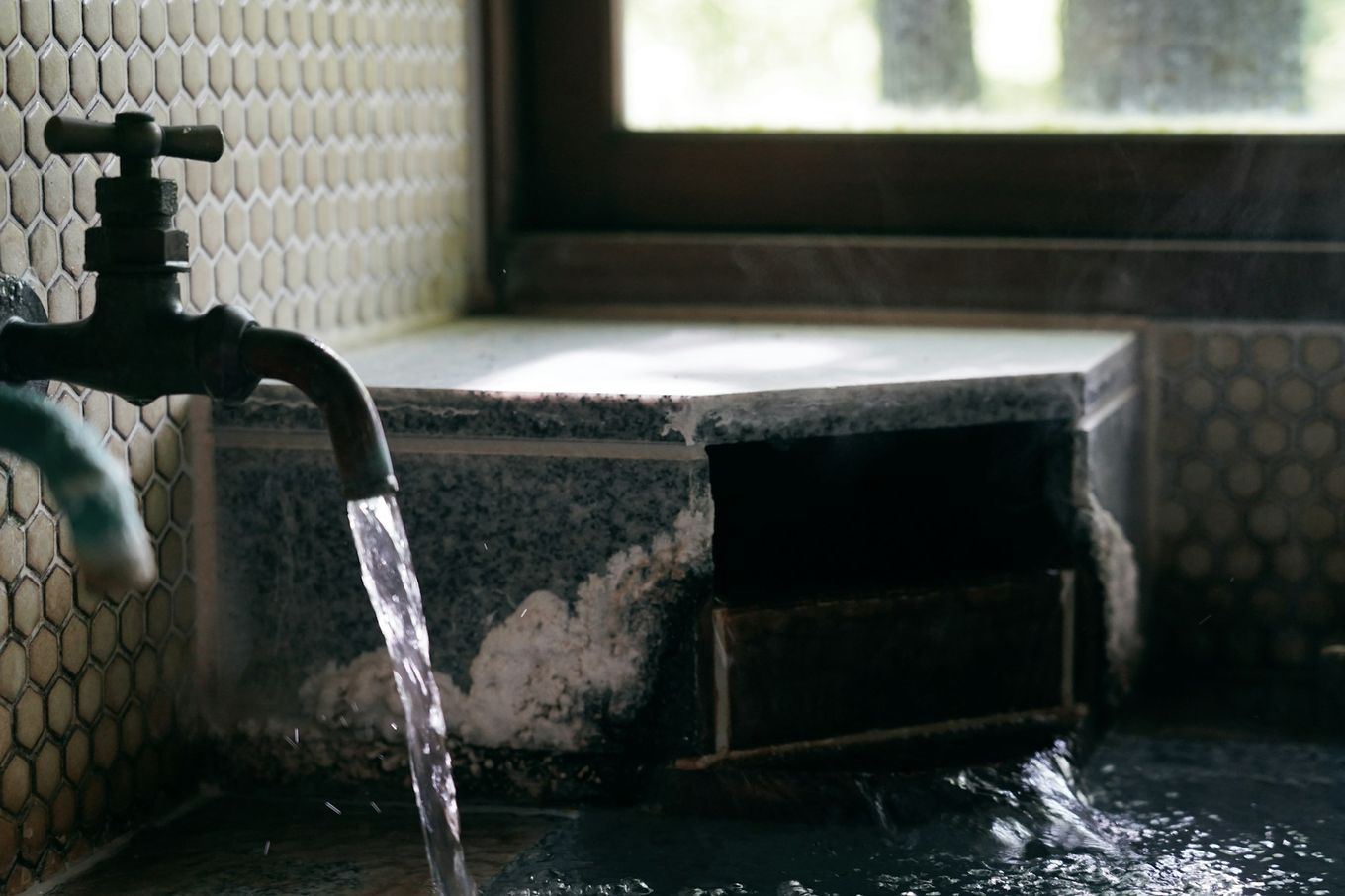
How do you find a ryokan with a private onsen?
Search in Japanese, on the ryokan's own site. The term that matters is 露天風呂付き客室 (roten-buro tsuki kyakushitsu), room with an open-air bath. For bookable private baths, search 貸切風呂 or 貸切露天風呂. Pick the town first, then open each ryokan's official page and its booking engine. All three of our samples sell the bath rooms directly, with prices by date, on Japanese pages you can read with a browser translator.
Three habits save hours. First, use the booking engine's tag filter: some Japanese ryokan booking systems let you tick 露天風呂付客室 before searching. Second, compare the same dinner plan across room types; the plan moves the price too, so compare like with like. Third, read the room description to the last line. That is where Hotel Sakurai's not-onsen note sits.
English listings often say "private onsen" for any of the three types. If a site cannot tell you which one you are buying, it cannot tell you the price difference either.
Which onsen towns should you search first?
Start with the town that fits your route, not the bath. Hakone is the easy one from Tokyo, and the priciest in our sample: Kamon is a free shuttle ride from Hakone-Yumoto station. Kurokawa is a small valley of ryokan in Kumamoto, best paired with a Kyushu trip. Kusatsu, in Gunma, had the cheapest room with its own tub, with the tap-water catch. We did not count listings: no official count exists.
If you are choosing a town rather than a ryokan, our comparisons do the routing for you. Kusatsu, Kinugawa and Minakami are covered in Hakone alternatives near Tokyo. Kurokawa, Kinosaki and Gero are compared in which onsen town fits your route.
Is a private onsen the answer for tattoos or shy first-timers?
Yes, it is the simplest answer to both. A bath that is yours, in-room or kashikiri, has no other guests, so tattoo rules for shared baths usually do not come into it. Hakone Kamon's booking page, for example, bars tattoos from its large baths specifically. Its FAQ, though, refuses tattooed guests in general terms, which is why you should ask before you book. For a first bath without strangers, a kashikiri at about ¥2,000 gives you the same experience as the ¥24,000 room upgrade.
Ask anyway when you book: rules belong to each ryokan and some apply them to every bath on site. Hakone's shared-bath options for tattoos are in our tattoo-friendly onsen guide. City hotels with large baths and their tattoo rules, chain by chain, are in hotels with public baths.
Can you book a private onsen without staying overnight?
Yes, at some ryokan, and it is the cheapest way in. Yamamizuki in Kurokawa rents its private bath to day visitors from ¥2,000 for 50 minutes, and its outdoor baths for ¥600 per person. Search the town name plus 日帰り 貸切風呂 (day-use private bath) to find others. Day-visitor hours differ from guest hours, so check the bath page the day before you go.
Which type of private bath should you book?
A kashikiri, for most first trips. It gives you the private soak for about ¥2,000 instead of ¥24,000 or more, and at Kamon the private baths are 100% spring water. Pay for the room with its own bath only if you will spend the evening in it, you want to bathe more than twice, or a balcony view is the point of the trip. Then confirm the source in writing.
| In-room bath | Kashikiri for guests | Day-use kashikiri | |
|---|---|---|---|
| Japanese search term | 露天風呂付き客室 / 客室温泉 | 貸切風呂 | 日帰り 貸切風呂 |
| Cost in our sample | +¥24,200 to +¥28,600 per room per night | ¥2,000 per 50 min (Yamamizuki); paid 45-min slot (Kamon) | From ¥2,000 per 50 min (Yamamizuki) |
| Time limit | None, for your whole stay | 45-50 min slot | 50 min slot |
| Real spring water? | Check: 1 of our 3 was tap water | Spring water at Kamon (stated); ask at others | Same bath as for guests |
| Tattoos | Your own bath | Your own slot | Your own slot |
| Best for | Long evenings in, views, honeymoons | First-timers, couples, tattoos | Day trips, tight budgets |
| Our pick | Only if you will use it all evening | Yes, for most first trips | Yes, if you are not staying |
Frequently asked questions
I'm heavily tattooed. Is a private onsen my best option?
Yes. An in-room bath or a kashikiri has no other guests, so shared-bath tattoo rules do not usually come into it; confirm with the ryokan when you book. Book a standard room and a kashikiri slot if the budget is tight; it costs about ¥2,000 where we checked, against about ¥24,000 more for a room with its own bath.
Is the water in an in-room bath real hot spring water?
Not always. One of our three samples, in Kusatsu of all places, states that its in-room open-air bath is not onsen. Look for 源泉かけ流し on the room page, and treat 温泉ではありません, or a tub described only by its wood, as tap water.
Why can't I find ryokans with private onsen on Booking.com or Airbnb?
Because the useful filters are in Japanese, on the ryokan's own booking pages. Search the town plus 露天風呂付き客室, open the official site, and tick the 露天風呂付客室 tag in its booking engine if it has one. All three ryokan in our sample sell these rooms directly with prices by date.
How far ahead should we book a room with a private bath?
As soon as your dates are fixed. Hakone Kamon's own calendar was open through April 2027 when we checked on 30 October 2026, about six months out. Hotel Sakurai's page showed 3 rooms left in its open-air-bath type for 21 January. These rooms are a small share of each inn, so they go first.
Is there a time limit on private baths?
On kashikiri, yes: 45 minutes at Hakone Kamon and 50 minutes at Yamamizuki. Kamon's slots are weekdays only and booked at the front desk. An in-room bath has no limit for your whole stay, which is the main thing the extra money buys.
Can couples share a kashikiri?
Yes, that is what they are for. Kashikiri are rented by the room or group, not by gender, so a couple or a family bathes together. Check the bath size and the minimum or maximum number of people on the ryokan's bath page.
Next step: pick the town before the ryokan. If you are coming from Tokyo and Hakone feels too busy, start with our Hakone alternatives near Tokyo, then search 露天風呂付き客室 in the town you choose.
