
Pick Kanazawa if you only have room for one. It is 2.5 hours from Tokyo on one direct shinkansen and about 1h50 from Kyoto with one change, so it costs you no extra day. Takayama is 4 hours from Tokyo and 2h15 to 2h35 from Nagoya on the Hida limited express. Pick Takayama only if mountain-town Japan is the point of your trip, and give it two nights.
Both towns get sold as "little Kyoto". That pitch is the problem. On a 7-10 day first trip, the honest answer is often neither. Here is the route math, verified on official Japanese timetables and fare tables on 30 October 2026.
Kanazawa or Takayama: which should I pick?
Kanazawa, for most first-timers. It sits on the Hokuriku Shinkansen between Tokyo and Kyoto, so it slots in without backtracking. You get a top-three garden, two geisha districts, a castle park and a big fish market. Takayama is smaller and prettier at street level, with a mountain setting, morning markets and sake breweries. But it sits on a single-track line in the Hida mountains, and getting in and out eats half a day each way.
A simple rule. If your trip runs Tokyo → Kyoto → Osaka and you want one quieter stop, Kanazawa costs you almost nothing in transit. If you are flying into or out of Nagoya (Chubu Centrair), or you want snow, onsen and an alpine town, Takayama fits better. If you want both towns plus Shirakawa-go, you need at least four nights for the three, not two.
What each one is better at
- Kanazawa wins on: transport, food (Omicho Market seafood), gardens (Kenroku-en, ¥320), art and museums, choice of hotels, evenings with something open.
- Takayama wins on: compact old-town streets, the riverside Miyagawa morning market, sake tastings, mountain scenery, onsen hotels in town, and a shorter bus to Shirakawa-go (about 50 minutes against about 1h15 from Kanazawa).
- Neither is quiet in high season. Both are popular with domestic tourists and tour groups, especially in autumn and on weekends.
How long does it take to reach each from Tokyo, Kyoto and Osaka?
Kanazawa is faster from everywhere. From Tokyo, the Kagayaki takes 2h24 to 2h41 for ¥14,600 with a reserved seat. From Kyoto it is 1h48 to 1h53 for ¥7,720, changing once at Tsuruga. Takayama takes about 4h05 from Tokyo for ¥16,340, 3h43 from Kyoto on the direct morning Hida for ¥7,790, and 2h15 to 2h35 from Nagoya for ¥6,140. That gap is the whole debate.
All fares below are standard-season reserved seats, broken down from the official fare tables: the base fare plus the non-reserved limited express charge plus ¥530. Peak dates add ¥200 to ¥400; quiet dates take ¥200 off. Times come from Ekitan sample searches for Thursday 19 November and Wednesday 2 December 2026.
The Tsuruga change, explained
Since March 2024 there is no direct Thunderbird from Kyoto or Osaka to Kanazawa. You ride the Thunderbird to Tsuruga and change to the Hokuriku Shinkansen (Tsurugi or another service). The two are priced as one through limited express charge: ¥3,980 reserved from Kyoto, on top of the ¥3,740 fare. Osaka to Kanazawa is ¥9,410 (¥4,840 + ¥4,570) and takes about 2h17 to 2h29. The change is one platform-to-platform transfer of 8 to 15 minutes on our sample trains.
Getting to Takayama
Takayama has no shinkansen. From Tokyo there are two sensible routes at almost the same price. Via Toyama: Kagayaki to Toyama, then the Hida south to Takayama, about 4h05 on the 07:20 departure, ¥16,340 (¥8,250 fare + ¥6,360 + ¥1,730). Via Nagoya: Hikari to Nagoya, then the Hida north, about 4h40 on our sample, ¥16,350 (¥8,910 + ¥4,710 + ¥2,730). With a Nozomi instead of a Hikari it is ¥16,560 today.
If your trip is in 2027, note one change. JR Central raises Nozomi reserved-seat charges for tickets bought from 1 July 2027: Tokyo–Nagoya goes from ¥11,300 to ¥11,880, so the Nozomi route becomes ¥17,140. Hikari, Kodama and non-reserved seats do not change. The Toyama route is not affected.
From Kyoto and Osaka, the Hida 25 runs direct each morning: 07:58 from Osaka, 08:31 from Kyoto, arriving 12:14. That is ¥8,450 from Osaka and ¥7,790 from Kyoto, reserved. You can leave Kyoto 30 minutes later, take the shinkansen to Nagoya and a local train to Gifu, and catch the same Hida 25 there; it costs ¥10,110 with non-reserved seats, ¥2,320 more, and adds two changes.
Which is better for a first trip: what do you actually see?
Kanazawa gives you more variety in two days. Day one is Kenroku-en and the castle park; day two is Higashi Chaya, the 21st Century Museum and Omicho Market. Takayama is a one-day town for most visitors: the old streets of Sanmachi, the Miyagawa morning market, Takayama Jinya (¥500) and a sake brewery or two. The second Takayama day is usually Shirakawa-go, Hida-Furukawa or an onsen.
We cover Kanazawa day by day in our three-day Kanazawa itinerary, so here are only the facts that change the choice.
- Kenroku-en costs ¥320; opening hours change on 16 October and 1 March.
- The 21st Century Museum of Contemporary Art closes from 6 May 2027 until a planned March 2028. If the museum is your reason to pick Kanazawa in summer or autumn 2027, it is not there.
- The Miyagawa morning market in Takayama runs daily, 7:00–12:00 from April to November and 8:00–12:00 from December to March. Some stalls close when they sell out.
- Takayama Jinya, the old government house, is ¥500 (free for high-school age and under), 8:45–17:00 from April to October and 8:45–16:30 from November to March.
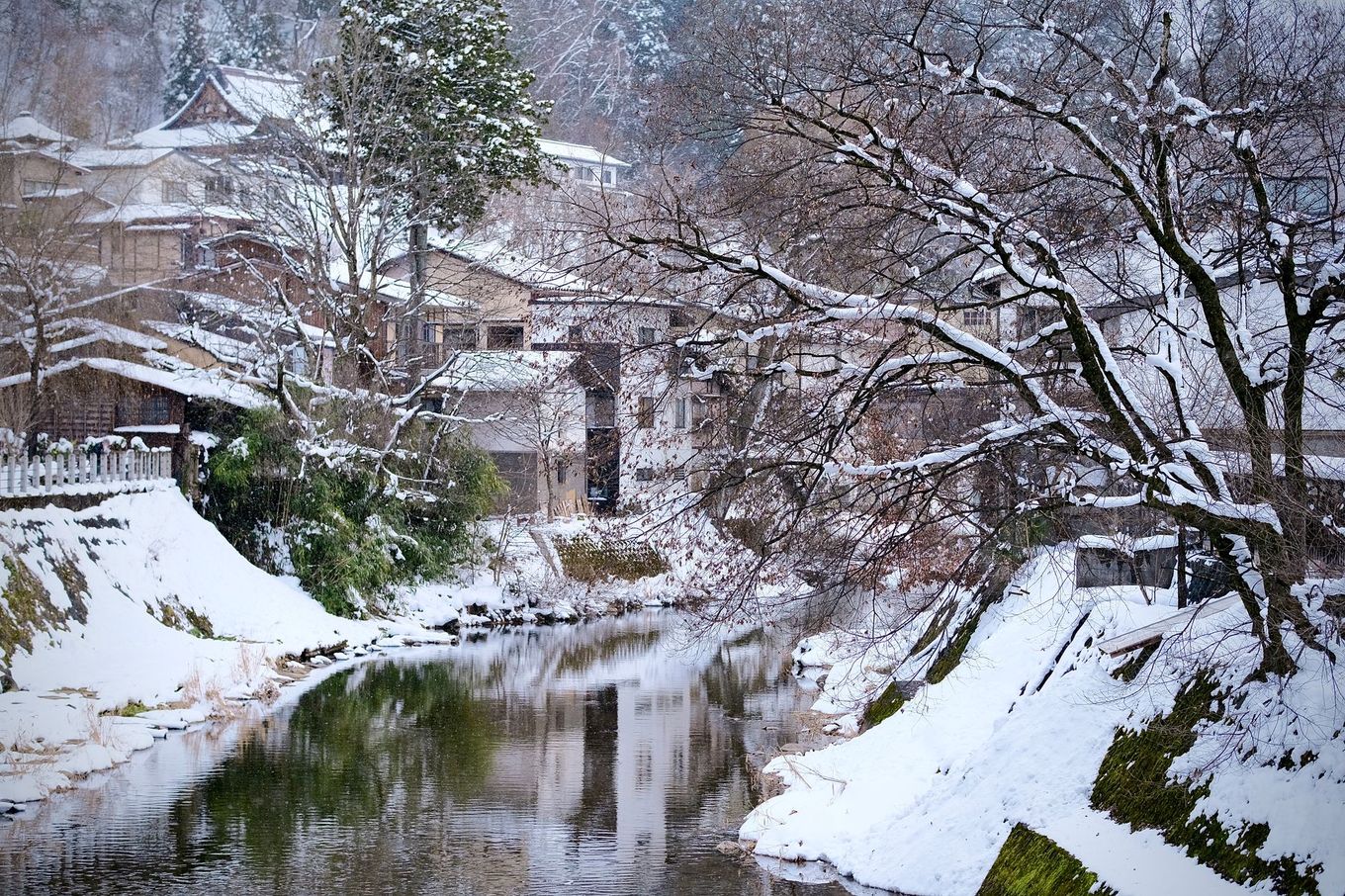
Season matters too. Takayama in January and February is a snow town, and the Hida line runs through white valleys. Kanazawa is easier to reach in winter, and its winter seafood season is a draw. In autumn both are busy.
Should I skip both and add a night in Kyoto?
Yes, if your whole trip is 7 to 10 days. Kanazawa costs ¥7,720 and about 1h50 each way from Kyoto, plus a hotel change. Takayama costs closer to four hours each way. On a short trip, that time buys a full extra day of Kyoto, Nara or Uji instead. Add Kanazawa from about 10 nights, and only if you route Tokyo → Kanazawa → Kyoto rather than doubling back.
One night is the worst option. You arrive mid-afternoon, see one district, and leave after breakfast. Reddit threads on this exact choice land in the same place: two nights or skip it. If you are already short on Kyoto time, our Kyoto where-to-stay guide helps you make that base count instead.
When Takayama earns the detour
- You fly into or out of Nagoya, so Takayama sits 2h15 to 2h35 away on the Hida.
- You want snow and onsen in winter without going to Hokkaido.
- You have 14 days or more and are doing the Kanazawa–Shirakawa-go–Takayama loop anyway.
How does the Shirakawa-go bus work between them?
Every seat is reserved, and you need a ticket before you board, so book early in spring, summer and autumn. The Kanazawa–Shirakawa-go–Takayama line is run jointly by Hokutetsu and Nohi Bus. Kanazawa to Shirakawa-go is ¥2,800 (about 1h15), Takayama to Shirakawa-go is ¥2,800 (about 50 minutes), and a through ticket Kanazawa–Takayama is ¥4,200 (about 2h15). Sales open one month before, to the day.
The catch is the through ticket. Hokutetsu's fare table says stopping off cancels the rest of the ticket. If you want to walk the village on the way, you buy two legs: ¥5,600 in total. Book both legs at the same time on the operators' Japanese booking site (Hassha Orai Net) or by phone; leave three to four hours between them.
- On the current timetable (revised 1 April 2025), the first buses on this line leave Kanazawa at 8:10 and Takayama at 7:50.
- The last departures from Shirakawa-go leave at 17:30 toward Kanazawa (in 18:45) and 17:25–17:30 toward Takayama (in 18:15–18:35).
- The national JR Pass does not cover this bus. These are private bus companies.
- You cannot leave a big suitcase overnight in the village. Send it ahead with luggage forwarding and ride with a daypack.
Winter changes the rules on four evenings. The 2027 light-up nights are reservation-only, and the gates close to day visitors in the afternoon. Our Shirakawa-go in winter guide has the dates, tours and ticket rules.
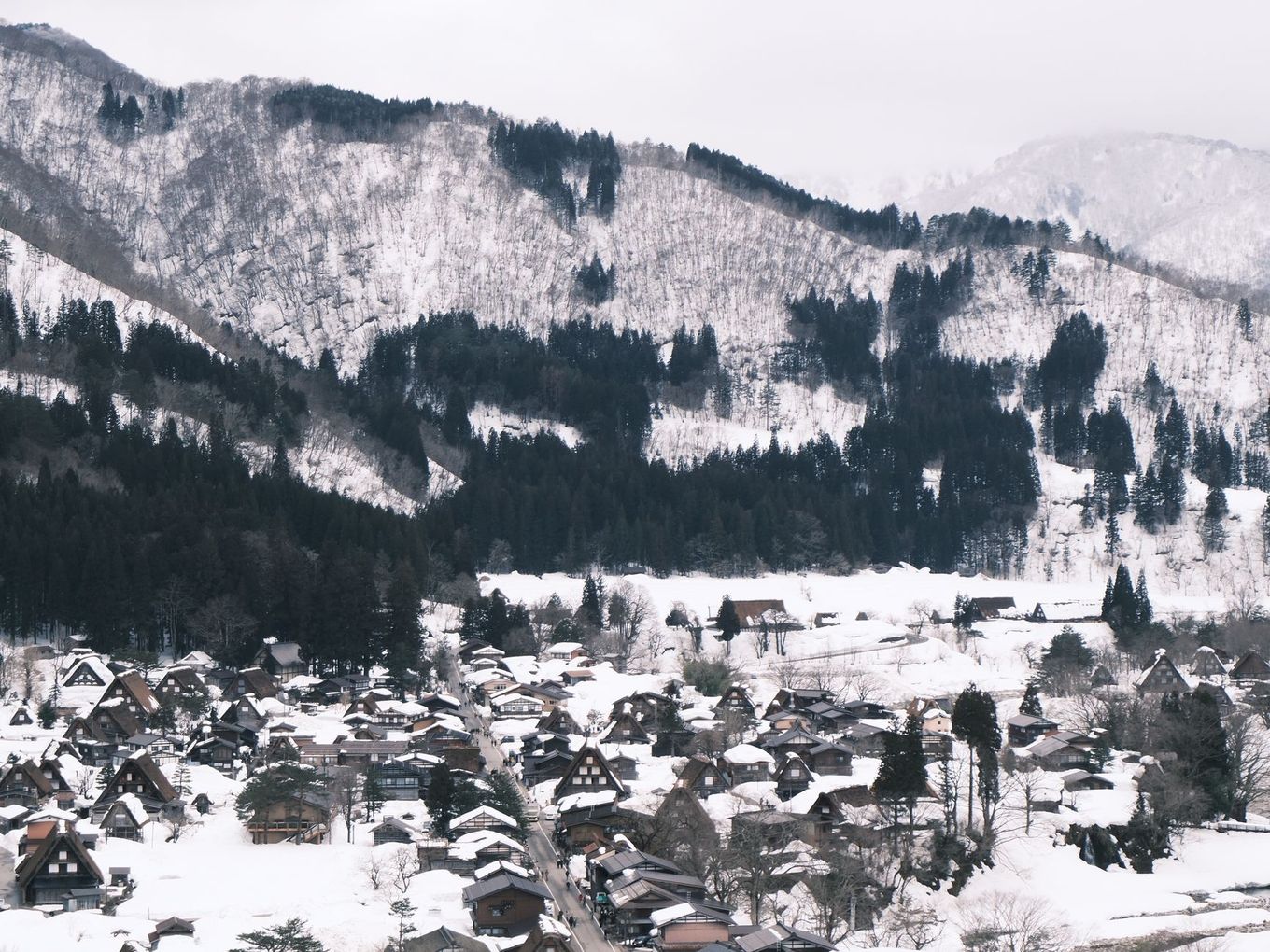
Can I do both in one route (Kanazawa – Shirakawa-go – Takayama)?
Yes, and it is the best way to see both. Take the shinkansen from Tokyo to Kanazawa, spend two nights, ride the bus to Shirakawa-go, walk the village for three or four hours, and continue to Takayama for two nights. Then take the Hida down to Nagoya (2h15 to 2h35, ¥6,140) and the shinkansen to Kyoto. That is four nights and one long, scenic transfer day.
You can also run it backwards from Osaka or Kyoto, or skip the village: the train from Kanazawa to Takayama via Toyama takes about 2h10 for ¥5,710 with non-reserved seats on our sample day. It is roughly the same time as the through bus, but you lose Shirakawa-go.
| Kanazawa | Takayama | |
|---|---|---|
| From Tokyo | 2h24–2h41 · ¥14,600 · direct | about 4h05 · ¥16,340 · 1 change |
| From Kyoto | 1h48–1h53 · ¥7,720 · 1 change | 3h43 · ¥7,790 · direct morning Hida 25 |
| From Nagoya | via Tsuruga, not a natural route | 2h15–2h35 · ¥6,140 · direct |
| Bus to Shirakawa-go | about 1h15 · ¥2,800 | about 50 min · ¥2,800 |
| Nights you need | 2 | 2 (1 is rushed) |
| Best for | Gardens, food, art, easy logistics | Old streets, mountains, snow, onsen |
| Winner for a first trip | Kanazawa: on the way, cheaper in time | Pick it only with 2+ nights and a Nagoya link |
Does the JR Pass cover it?
The trains, yes; the bus, no. The Kagayaki, the Thunderbird, the Tsurugi and the Hida are all JR, so the national JR Pass covers them. The Shirakawa-go bus is run by private companies and is never included. For this region, though, the cheaper answer is usually a regional pass: the Takayama-Hokuriku Area Tourist Pass costs ¥19,800 for 5 consecutive days and includes the bus.
That pass covers non-reserved seats from Osaka and Kyoto to Tsuruga, the Hokuriku Shinkansen from Tsuruga to Toyama, the Hida line from Nagoya to Toyama, and the Kanazawa/Toyama–Shirakawa-go–Takayama buses. Reserved seats are free up to six times. It does not cover the Tokaido Shinkansen. Bus seats still need booking. From 25 December 2026 to 5 January 2027 every Hida is reserved-only, so get your free seat ticket first.
Does it pay? Osaka → Kanazawa → Shirakawa-go → Takayama → Nagoya on reserved single tickets is ¥9,410 + ¥2,800 + ¥2,800 + ¥6,140 = ¥21,150, so the pass saves ¥1,350. Starting in Kyoto instead, singles cost ¥19,460 and the pass loses by ¥340 unless you add one more ride. For whole-country pass math, see our regional JR pass matrix and is the JR Pass worth it.
Frequently asked questions
Is one night in Kanazawa or Takayama worth it?
Rarely. One night gives you an afternoon and a morning, and the transfers eat the rest. Two nights is the minimum that feels worth the hotel change; otherwise give the night to Kyoto.
How do I get from Kanazawa to Takayama?
The bus via Shirakawa-go is ¥4,200 and about 2h15 on a through ticket, or ¥5,600 if you stop in the village. The train via Toyama takes about 2h10 for ¥5,710 with non-reserved seats. All bus seats are reserved, so book a month ahead in busy seasons.
Kanazawa or Takayama in winter?
Takayama, if you want snow. It is a mountain town that usually sits under snow in January and February, with onsen hotels in town. Kanazawa is easier to reach, and the bus timetable to Shirakawa-go still runs on normal winter days.
Is Takayama too touristy?
The old streets of Sanmachi get crowded from mid-morning. Go to the Miyagawa morning market from 7:00 (8:00 in winter) and walk the old town before 10:00. Late afternoon, after the day-trip coaches leave, is calm again.
Does the JR Pass cover the Shirakawa-go bus?
No. The bus is run by private companies (Hokutetsu, Nohi and partners). The Takayama-Hokuriku Area Tourist Pass, ¥19,800 for 5 days, does include it, but you still have to reserve your seat.
Can I still visit the 21st Century Museum in 2027?
Only until 5 May 2027. The museum closes from 6 May 2027 until a planned March 2028. Kenroku-en, the castle park and the chaya districts stay open as usual.
Next step: lock the route. Our 14-day Japan itinerary shows where Kanazawa fits, and the bus seats go on sale one month ahead, so put that date in your calendar now.
